
“`html
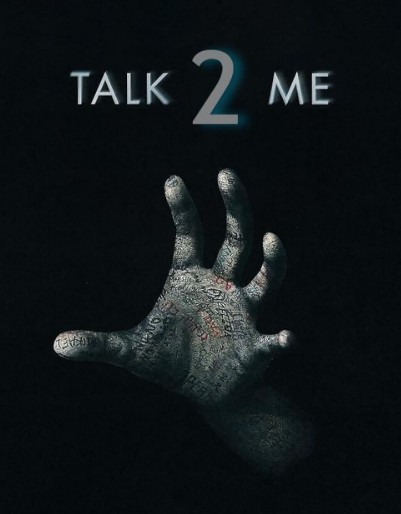
The supernatural rules in Talk to Me appear simple enough to turn possession into a party game: light the candle, hold the embalmed hand, say “Talk to me,” invite the spirit inside, and end the experience before ninety seconds have passed. The film gradually reveals something more disturbing, however. The teenagers may know how to operate the ritual without actually understanding what they are operating.
That distinction gives Talk 2 Me an unusually strong foundation for expanding its supernatural world. The sequel does not necessarily need more monsters or a detailed history lesson about the hand. It can make the mythology larger simply by proving that what seemed like a rule in the first film was only a fragment of one.
At the same time, the hand already functions as more than a supernatural device. Its use follows the social logic of intoxication, compulsion, peer pressure, and destructive coping. The object gives the film a remarkably physical metaphor for addiction: something dangerous that can be held, shared, timed, filmed, passed around, and repeatedly justified as controllable.
The first film gives us instructions, not certainty
One of the smartest choices in Talk to Me is that nobody arrives to explain the mythology. There is no occult specialist, recovered manuscript, priest, historian, or convenient archive waiting to tell Mia exactly what the hand is.
Instead, knowledge circulates horizontally. One teenager teaches another teenager how the ritual supposedly works. The hand has already passed through other owners, and the instructions arrive with it like a piece of dangerous folklore.
That matters because the Philippou brothers have explained that they developed a much larger mythology behind the film, including the history of the hand, the spirits and the supernatural mechanics. They also deliberately kept the characters from possessing that complete knowledge. The rules used by the teenagers are therefore best understood as working assumptions, not necessarily supernatural laws.
What are the known possession rules in Talk to Me?
From the characters’ perspective, the ritual has a recognizable sequence.
- A candle is lit, apparently opening or establishing the connection between the living and the dead.
- The participant grips the embalmed hand.
- Saying “Talk to me” allows the participant to perceive a spirit.
- Saying “I let you in” invites possession.
- The possession is supposed to end before the ninety-second threshold.
- The hand must be separated from the participant and the candle extinguished to close the encounter.
As instructions, these rules seem precise. As explanations, they tell us almost nothing.
We still do not know exactly what the candle changes, why particular phrases matter, whether ninety seconds is an absolute boundary, why certain spirits appear to certain people, or how much influence remains after the ritual supposedly ends.
The difference between knowing a procedure and understanding a system is where much of the horror lives.
The ninety-second limit creates an illusion of control
The ninety-second rule is especially effective because a precise number makes the supernatural feel measurable. Once danger can be placed on a stopwatch, it begins to look manageable.
The teenagers do not behave as though they are opening a door to an unknowable afterlife. They behave as though they have discovered the recommended dose.
That transforms the rule into part of the temptation. If possession had no apparent limit, fewer people would volunteer. The existence of a limit reassures them that the experience can be consumed safely.
The rule does not merely protect the characters from danger. It helps persuade them to participate in it.
The spirits may not be random
Another important piece of the film’s mythology exists beneath what the characters understand. Danny Philippou has described the spirits as being drawn toward the emotional state of the person holding the hand. That makes possession less like supernatural roulette than the teenagers assume.
Emotion may function as part of the connection.
This changes how Mia’s experience can be interpreted. Her grief is not simply a psychological theme running beside the supernatural plot. It may affect what becomes capable of reaching her through the hand.
The danger is therefore not only that a person opens a door. The person may influence what is waiting on the other side of it.
A supernatural system built from corrupted folklore
The hand has apparently moved between many people before reaching Mia’s group. That gives the mythology a useful structural feature: information can degrade as the object travels.
Imagine an occult version of a rumor repeated through dozens of social circles. Someone remembers the candle. Someone adds the ninety-second warning. Someone discovers that a particular phrase produces a result. Another detail disappears because nobody understood why it mattered.
Eventually, ritual becomes protocol without explanation.
That creates an excellent mechanism for a sequel because a new group does not have to discover an entirely new supernatural object. They only need to inherit a slightly different version of the same instructions.
Two groups could use the same hand differently and both believe they are following the correct rules. Contradictions between their experiences would reveal more about the underlying system without requiring a character to explain it directly.
Why the embalmed hand works as an addiction metaphor
The connection between the hand and addictive behavior is not merely a fan interpretation. Danny Philippou has discussed the object as representing different kinds of vice, including drugs and alcohol, while also connecting its use to peer pressure and attention-seeking behavior.
The film is more interesting, though, because it does not reduce that idea to “the hand equals drugs.” The metaphor works through behavior.
Possession feels good before it becomes frightening
One of the film’s most important choices is allowing possession to be pleasurable.
Horror stories often make cursed objects visibly undesirable. The audience immediately wonders why anyone would touch them twice. Talk to Me avoids that problem. Possession produces adrenaline, altered behavior, social attention and an intense experience that the characters actively want to repeat.
The danger therefore competes with a genuine reward.
That is why repeated use does not require the characters to become irrational overnight. They have already experienced the hand without immediate catastrophe. Each successful session becomes evidence they can use to justify the next one.
The ritual turns supernatural danger into a controlled dose
The stopwatch is crucial to the metaphor.
Ninety seconds divides “acceptable” possession from excessive possession. Instead of asking whether inviting a dead entity into the body is safe, the group asks how much exposure is safe.
That shift in reasoning is familiar to many stories about dependency. The question moves from “Should I do this?” to “How much can I get away with?”
Once that happens, the rule intended to establish safety becomes part of the justification for continued risk.
Mia does not use the hand for the same reason as everyone else
The metaphor becomes darker when the group’s recreational use intersects with Mia’s grief.
What begins as a shared thrill becomes a private source of emotional relief. Mia believes the supernatural connection may allow her to reach her mother, which gives her a reason to ignore boundaries that previously seemed obvious.
This is where the hand moves beyond a metaphor for experimentation and toward a metaphor for dependency. The experience is no longer valuable only because it feels intense. It becomes valuable because Mia believes she needs what it provides.
Whether the spirit is actually giving her what she wants becomes less important than Mia’s need to believe it is.
The hand turns human connection into something dangerous
The choice of a hand is also important beyond the addiction metaphor. The filmmakers have spoken about hands and physical contact as recurring images connected to human relationships in the screenplay.
A handshake ordinarily establishes contact between two living people. The embalmed hand corrupts that gesture. A person reaches out for connection and receives a corpse.
Even the language of the ritual reinforces the idea. “Talk to me” is an ordinary request for communication. “I let you in” sounds emotionally intimate before it becomes literally invasive.
Mia’s tragedy can therefore be read partly as a failure of connection. She reaches toward an object that promises impossible contact while becoming increasingly separated from the living people capable of responding to her.
The visual metaphor is unusually efficient: she holds on more tightly to something dead precisely when she most needs contact with the living.
Possession becomes a social behavior instead of a forbidden ritual
Traditional possession horror often begins when someone accidentally violates a boundary. Talk to Me changes the structure by making violation recreational.
The characters know something supernatural is happening. That is exactly why they participate.
Phones come out. Friends laugh. Someone records the possessed participant. The occult experience becomes entertainment, proof of courage and material to circulate socially.
This creates another useful path for expanding the universe. The hand does not need to remain attached to the same group of characters because the behavior surrounding it is already contagious.
The object spreads through curiosity before the spirits spread through possession.
What the ending reveals about the larger spirit world
The ending of Talk to Me makes the mythology significantly larger without explaining it.
After Mia dies, she experiences the isolation that had previously belonged to the spirits. She cannot communicate normally with the living. Then a distant light appears, and another group performs the ritual. From their perspective, Mia is now the figure standing on the other side.
The sequence suggests that the hand does not merely summon a fixed collection of ghosts. The system may continue incorporating the dead.
It also confirms that the phenomenon is not confined to Mia’s immediate social circle. The ritual exists elsewhere, which gives a sequel a natural way to shift perspective without abandoning the central mythology.
How Talk 2 Me can expand the mythology without explaining away the fear
Public comments from the filmmakers have indicated that more than one version of the Talk 2 Me screenplay has been considered, involving different groups of characters and locations. Until a storyline is officially announced, anything beyond that remains speculation.
From a narrative perspective, though, the first film already demonstrates the most effective way to make the world larger: reveal consequences rather than explanations.
Show competing versions of the ritual
A different group might use another time limit, another phrase or another method for ending possession. That would immediately raise a question: which version is correct?
More disturbingly, both versions might work.
Reveal a rule by breaking it
The first film teaches us about the ninety-second threshold because characters exceed it. A sequel can use the same principle elsewhere. A rule becomes interesting when the audience discovers what happens after someone violates it.
Explanation follows consequence rather than preceding it.
Let the spirits understand more than the living
The spirits are frightening partly because the relationship is asymmetrical. Human characters know very little about them, while the entities appear capable of exploiting memory, grief and emotional vulnerability.
Preserving that imbalance is more unsettling than giving the audience an encyclopedic explanation of the afterlife.
Avoid turning the hand into a technical manual
A mythology can become less frightening when every mystery receives a name, chronology and explanation. Once the audience understands the complete system, supernatural danger risks becoming a puzzle with established parameters.
The stronger approach for Talk 2 Me would be to confirm enough information to make the first film look different in retrospect while leaving larger uncertainties intact.
The most frightening rule may be that the rules are wrong
The mythology of Talk to Me works because the supernatural has structure without becoming fully understandable. The characters have enough knowledge to participate and not enough knowledge to recognize the true scale of what they are doing.
The hand reinforces that uncertainty visually. It is a tool for contact, a party drug, an inherited ritual and a doorway disguised as an object small enough to carry into someone’s house.
Its addiction metaphor works for the same reason the supernatural horror works: control always seems possible just before it disappears.
If Talk 2 Me expands this universe successfully, the most revealing discovery may not be where the hand came from. It may be discovering that the characters in the first film were never as close to understanding it as they thought.
For more reflections on supernatural fiction, psychological horror and stories in which ordinary forms of connection become dangerous, explore Raphael T. Maio’s microfiction archive or discover his published work on the books page.
“`