“`html
The most important revelation in The Watchers is not simply that the creatures in the forest are fairies. It is that the film uses an older and much less comforting idea of what a fairy can be: a being connected to hidden places, governed by unfamiliar rules, dangerous when its territory is violated, and disturbingly close to humanity without actually being human.
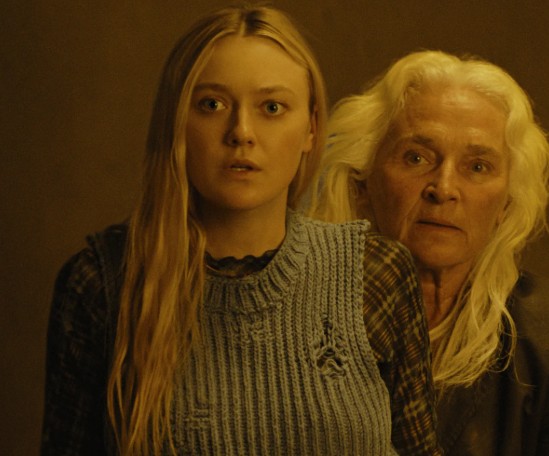
Written for the screen and directed by Ishana Night Shyamalan from A.M. Shine’s novel, The Watchers places Mina inside a remote forest in western Ireland, where a group of strangers must enter a bunker before nightfall and present themselves before mysterious beings that come to observe them. The film initially behaves like creature horror. Its mythology gradually reveals something stranger: the monsters belong to the world of fairy folklore.
That choice matters because the benign, miniature fairy familiar from children’s fantasy represents only one branch of a much wider cultural history. Irish folk tradition preserves stories in which supernatural beings occupy specific landscapes, demand caution, interfere with human lives, and are treated with respect precisely because their intentions cannot safely be assumed.
The fairies of Irish folklore were never simply harmless
Calling the creatures in The Watchers “fairies” can initially sound almost contradictory. The word now carries associations with wings, wishes, tiny bodies and benevolent magic. Irish tradition contains something much more complicated.
The aos sí, supernatural beings associated with Irish folklore, are traditionally connected with an unseen world that overlaps the human landscape. Heritage Ireland describes them as inhabitants of underground fairy forts, distant supernatural realms or an invisible world existing beside our own. Folk belief also treats certain hills, woods, rings and hawthorn trees as places that should not be carelessly disturbed.
Records preserved by Ireland’s National Folklore Collection show how persistent this relationship between fairies and place became. Accounts surrounding fairy forts include warnings about approaching particular locations after dark or interfering with land associated with supernatural inhabitants.
The important distinction is that these beings are not frightening because they are simply evil. They are frightening because human beings do not fully control the relationship.
Why the forest is more than a monster habitat
This older relationship between supernatural beings and landscape helps explain why the forest in The Watchers is so effective.
In conventional creature horror, a forest may simply provide concealment. The monster happens to live there. In The Watchers, the stronger reading is that the location belongs to the creatures in a much deeper sense. The characters have entered a territory whose rules existed before their arrival.
That changes the structure of the danger. Mina and the others are not hunters attempting to understand an animal. They are trespassers trying to survive inside a system they did not create.
The bunker therefore functions almost like an artificial island inside supernatural territory. During the day, the characters receive limited freedom. At night, the forest changes ownership again.
This is one of the film’s strongest transformations of folklore into survival horror: a traditional warning about respecting particular places becomes a practical question of whether the characters will still be alive after sunset.
The burrows turn the fairy mound into something physical
Irish traditions frequently connect supernatural inhabitants with the síd: mounds and places associated with the Otherworld. The Watchers takes the idea of beings beneath the landscape and makes it aggressively literal.
The Watchers retreat underground during daylight. Their tunnels are not decorative mythology added to explain the monsters after the fact. They reorganize the geography of the story.
A forest that appears empty on the surface is actually occupied from below.
That creates a particularly useful form of folk horror. Civilization has not discovered an empty wilderness containing an unknown species. It has built over an older layer of the world without completely understanding what was already there.
Changelings make identity itself dangerous
The connection between The Watchers and fairy tradition becomes even more disturbing when the creatures begin reproducing human appearances.
Changeling stories form a significant part of European fairy lore, including Irish tradition. In these accounts, a human — frequently a child — is taken and another being is left in that person’s place. Historical examples preserved by the National Folklore Collection demonstrate how seriously the possibility of substitution once appeared within local storytelling traditions.
It is important, however, not to treat the Watchers’ exact abilities as authentic changeling folklore.
Traditional changeling stories concern substitution. The Watchers develops that fear into a different mechanism: its creatures study human beings, reproduce their bodies and behavior, and gradually improve their imitations. The movie is not documenting one specific legend. It is taking the older anxiety — that the familiar person in front of you might no longer be what they appear to be — and constructing a new monster around it.
Mimicry is more disturbing than disguise
A disguise hides a known identity. Mimicry creates uncertainty about whether there is any stable identity underneath.
That distinction explains why the Watchers need to observe their captives. The people inside the Coop are effectively teaching their predators how to become more convincing people.
Every gesture becomes data. Every interaction becomes instruction. The nightly ritual is therefore more disturbing than simple imprisonment: the prisoners are being studied by beings trying to reduce the distance between themselves and humanity.
The mirror makes the fairy threat psychological
The Coop’s enormous mirrored wall is one of the film’s most useful inventions because it turns observation into a two-sided problem.
The humans cannot clearly see the beings outside, but the beings can study the humans. The prisoners therefore spend each night looking at their own reflections while knowing that another intelligence occupies the darkness beyond the glass.
That is already unsettling. Once the creatures’ ability to imitate people becomes clear, the image acquires another meaning.
The characters are looking at themselves while something outside is learning how to create another version of them.
The fear is no longer merely being watched. It is becoming reproducible.
Transformation has deeper roots than the film’s monsters
Irish mythology also contains numerous transformations and crossings between human, animal and supernatural forms. Medieval narratives associated with the Tuatha Dé Danann, for example, include figures taking other shapes, while stories connected to the supernatural Otherworld repeatedly weaken the boundary between appearance and identity.
This does not mean that an ancient Irish story contains monsters behaving exactly like the Watchers. It means that transformation already belongs naturally to the mythological vocabulary from which a modern horror story can build.
The Watchers modernizes that instability. Shapeshifting becomes imitation. Otherworldly transformation becomes a threat to personal identity. A supernatural double is no longer merely magical; it is a predator capable of replacing the evidence by which one human recognizes another.
The rules resemble folklore even when the details are invented
One reason folk horror works so well with survival narratives is that folklore often comes with prohibitions.
- Do not interfere with a particular place.
- Do not offend what inhabits it.
- Do not assume ordinary rules apply after crossing a boundary.
- Do not trust appearances too quickly.
- Respect the warning even when its logic is unclear.
The specific laws governing the Coop and the Watchers belong to A.M. Shine’s fictional mythology and its screen adaptation. Irish folklore does not contain a traditional rule demanding that humans stand before a giant window every night so fairies can observe them.
What feels folkloric is the structure underneath those rules.
Survival depends on accepting that the environment contains invisible boundaries and consequences. A character does not need to understand why a prohibition exists before violating it becomes dangerous.
Why “Celtic fairy mythology” needs a little precision
Discussions of The Watchers often describe its mythology broadly as “Celtic folklore.” That is useful as a general label, but it can also flatten traditions that are more specific.
Celtic cultures include distinct Irish, Scottish, Welsh, Manx, Breton and Cornish traditions, among others. They overlap in important ways, but they are not interchangeable.
Because The Watchers is set in Ireland and its mythology draws so strongly on ideas associated with Irish fairy belief, Irish fairy folklore is usually the more precise description.
The broader Celtic connection remains useful, particularly because related supernatural traditions cross the Irish Sea and appear in Scotland and elsewhere. Even A.M. Shine has discussed the continuing importance of Ireland’s inherited folklore to his horror fiction and the way old stories remain tied to particular landscapes.
The film reverses the modern image of fairy magic
The most effective subversion in The Watchers is therefore not making something innocent unexpectedly evil. The older material was already stranger than the sanitized image.
The film effectively reverses a cultural simplification.
Instead of fairies existing to grant something to human beings, humans become objects of their interest. Instead of supernatural beauty being reassuring, imitation becomes suspicious. Instead of entering an enchanted forest offering escape from ordinary life, entering the forest means becoming subject to someone else’s rules.
Magic has not disappeared. Its point of view has changed.
When folklore becomes a survival system
What makes the fairy mythology of The Watchers useful to the story is not historical accuracy in every supernatural detail. The film is creating its own mythology, not reconstructing a single traditional tale.
Its stronger connection to Irish folklore lies at a deeper level: hidden inhabitants beneath familiar landscapes, dangerous boundaries, unstable identities, supernatural substitution, and the possibility that surviving an encounter depends on respecting rules humans only partially understand.
This is why revealing the Watchers as fairies does not have to make them less frightening. Properly understood, it can do the opposite.
A monster belongs to the forest because the story puts it there. A folkloric being suggests that the forest may have belonged to it long before the human characters arrived.
For readers interested in stories where familiar spaces gradually become unreliable, Raphael T. Maio’s books and microfiction archive continue exploring horror built around uncertainty, altered perception and the moment when the ordinary stops behaving normally.
Sources and further reading
- Dúchas — National Folklore Collection, University College Dublin.
- Heritage Ireland: Samhain and Irish supernatural tradition.
- CELT: Corpus of Electronic Texts, University College Cork, for medieval Irish material involving supernatural transformation.
- Entertainment Weekly interview with Ishana Night Shyamalan on adapting A.M. Shine’s novel.
“`