
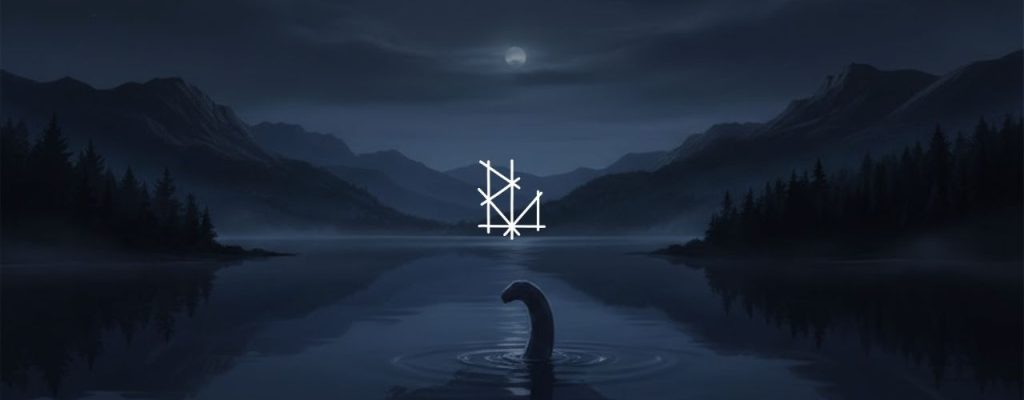
The Loch Ness Monster has long been treated as folklore, a curiosity for tourists and skeptics alike. Yet beneath the surface of this ancient Scottish lake lies a far more unsettling possibility. When examined through the lens of deep-sea horror, the Loch Ness Monster transforms from myth into a symbol of something older, deeper, and profoundly alien.
The Loch Ness Monster and the Fear of Deep Water
Fear of the deep is not irrational. Humans evolved to survive on land, not in vast, lightless waters. Loch Ness, with its dark peat-stained depths and near-zero visibility, triggers the same primal dread associated with the open ocean.
The Loch Ness Monster thrives in this psychological space. It is never fully seen, never clearly defined. Witnesses describe shapes, humps, and movement, but never clarity. This ambiguity is what transforms Nessie into a perfect deep-sea horror entity.
- Unknown depth and unseen movement
- Limited visibility that fuels imagination
- The sense that something is always beneath you
Deep-Sea Horror Potential Hidden in Loch Ness
True horror does not rely on size alone, but on isolation and concealment. Loch Ness reaches depths of over 230 meters, making it one of the deepest lakes in the British Isles. Unlike the ocean, however, it is enclosed, silent, and ancient.
From a horror perspective, this creates a perfect scenario. A creature does not need to be massive. It needs time, darkness, and secrecy. The Loch Ness Monster represents the idea that something has survived unnoticed, adapting slowly while humanity remained unaware.
An Ancient Predator or a Living Relic
Some theories suggest Nessie as a surviving prehistoric creature. From a terror narrative standpoint, this idea is deeply unsettling. A being that predates civilization carries with it a complete indifference to human existence.
This aligns closely with cosmic and supernatural horror themes found in modern literature. The terror comes not from aggression, but from insignificance.
Why the Loch Ness Monster Still Haunts Modern Horror
The Loch Ness Monster endures because it refuses to be explained. Sonar scans, underwater drones, and scientific expeditions have failed to erase the myth. Instead, each attempt deepens the mystery.
In horror storytelling, this persistence matters. The monster is not a creature to be defeated. It is a presence to be endured. Much like psychological and supernatural terror, it exists whether we believe in it or not.
This same thematic tension can be found in modern horror literature, where the unseen often causes more damage than the visible.
The Monster as a Psychological Abyss
Perhaps the Loch Ness Monster is not a creature at all, but a reflection. A manifestation of humanity confronting the idea that the world still contains places beyond our control and understanding.
This mirrors the slow-burn dread found in dark drama and supernatural narratives, where reality itself becomes unstable.
Stories that explore this psychological collapse, much like those found in terror and suspense fiction, resonate because they tap into the fear of what cannot be named.
The Loch Ness Monster as Modern Deep-Sea Horror
Viewed through a horror lens, the Loch Ness Monster is no longer a question of biology. It becomes a symbol of submerged fear. A reminder that some depths are not meant to be explored.
It waits. It observes. And whether real or imagined, it continues to shape the way we perceive the darkness beneath calm waters.
I invite you to check my books
Orto https://www.amazon.com.br/Orto-English-Raphael-T-Maio-ebook/dp/B0FWMN6KZJ?ref_=ast_author_mpb
Grake Hills https://www.amazon.com.br/Welcome-Grake-English-Raphael-Trindade-ebook/dp/B08JRY74FG?ref_=ast_author_dp&th=1&psc=1