
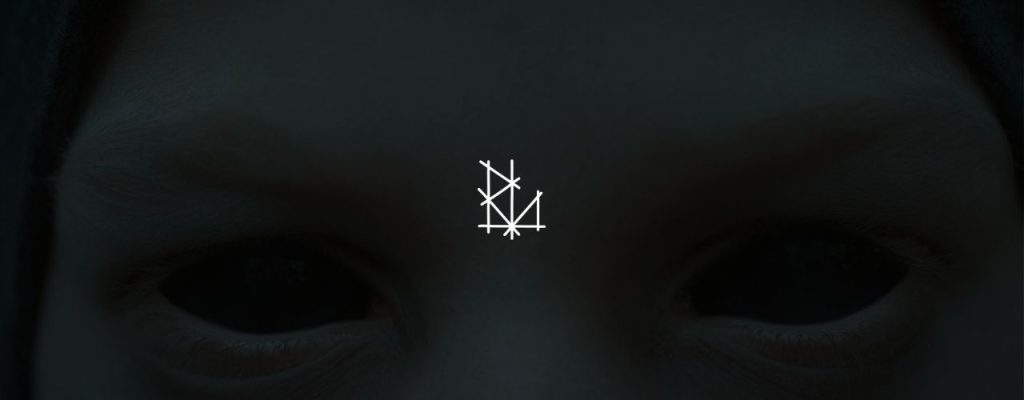
The Black-Eyed Children are among the most disturbing modern urban legends. They don’t chase, scream, or attack. They knock. They ask politely. And they wait in silence. Reports describe children with pale skin, emotionless voices, and eyes completely black, standing at doors, gas stations, or parked cars late at night.
What makes these encounters so unsettling is not what they do, but what they represent. In this article, we explore the origins of the Black-Eyed Children legend, the most common encounter patterns, and why this modern myth continues to haunt contemporary horror culture.
What are the Black-Eyed Children urban legends
The Black-Eyed Children urban legends describe encounters with children between six and sixteen years old who appear normal at first glance, until the eyes are noticed. No whites. No pupils. Just black. The detail is small, but it changes everything, because it turns innocence into an alarm bell.
Witnesses often report:
- A sudden feeling of dread or irrational fear
- Children asking to be let inside a home or car
- Flat, rehearsed speech
- An overwhelming urge to refuse entry
The encounters usually end without physical harm, which paradoxically makes them more disturbing. Nothing happens. And yet, everything feels wrong, like reality flinched but didn’t break.
The origins of the Black-Eyed Children legend
Unlike ancient folklore, the Black-Eyed Children are a relatively recent phenomenon. The first widely known reports appeared in the late 1990s, spreading through forums, blogs, and later creepypasta communities. Their modern origin gives the legend a unique quality: it feels like a myth being born in real time.
- No clear cultural root
- No defined mythology
- No confirmed explanation
The legend grows through repetition, variation, and shared unease rather than tradition. Each retelling adds a shadow detail, and those shadows accumulate.
Common patterns in Black-Eyed Children encounters
Late-night appearances
Most encounters happen after sunset, often near midnight. Darkness amplifies the sense of vulnerability and isolation, making ordinary places feel staged for something unnatural.
Requests for permission
The children rarely force entry. Instead, they ask to come in, to use the phone, or to get help. This echoes old horror rules where permission grants access, like the door is not just a barrier, but a contract.
Emotional manipulation
Witnesses often describe an internal struggle. A voice telling them to help. Another screaming to refuse. The terror exists in that hesitation, because it weaponizes empathy, turning kindness into risk.
The psychological horror behind Black-Eyed Children
The true power of the Black-Eyed Children lies in psychological terror, not supernatural spectacle. They exploit deeply ingrained instincts that usually keep us human, and twist them into something unsafe.
They target:
- Protecting children
- Trusting innocence
- Offering help
When those instincts collide with fear, the result is cognitive dissonance. The mind cannot reconcile what it sees with what it feels. That mismatch lingers, and it can make a quiet hallway feel suspicious for days.
Are the Black-Eyed Children supernatural
There is no consensus. And that uncertainty is essential to the legend’s strength. The Black-Eyed Children survive because they refuse to explain themselves. The more you try to name what they are, the more slippery the story becomes.
Common interpretations include:
- Paranormal entities mimicking children
- Demonic figures bound by invitation rules
- Psychological hallucinations triggered by fear
- Modern folklore shaped by collective imagination
Whether you believe in the supernatural or not, the structure of the legend is built to trap you in one question: why do they need you to say yes.
The Black-Eyed Children in modern horror culture
The Black-Eyed Children urban legends have influenced modern horror fiction, online storytelling, and psychological terror narratives. They thrive in spaces where silence, restraint, and implication matter more than violence.
They represent a shift from monsters that attack to monsters that wait. And waiting is far more unsettling, because it forces the reader to sit inside anticipation.
Why these encounters feel so real
Many reports emphasize normality. Suburban streets. Quiet houses. Familiar settings. The horror doesn’t come from the environment, but from a subtle violation of reality, a distortion so small it feels plausible.
Something looks almost human. Almost safe. Almost familiar.
When horror knocks instead of screams
The Black-Eyed Children prove that modern horror doesn’t need blood or chaos. It needs hesitation. Silence. And a closed door that almost opens. If you’re drawn to stories where terror grows slowly, where the threat is implied rather than shown, and where the unknown lingers long after the final sentence, this legend speaks directly to that fear.